


Key Takeaways
- Partnerships outlast the brief. Jersey Mike’s, Ascend Learning, Kaplan Test Prep and Roc360 have each run six years or longer, well past the first scope. Fragrance.com is an active client who has been with us for more than 12 years.
- Many start as rescues. FrankCrum and MIDAS came to First Factory after working with other vendors, then expanded the work.
- AI is already in production. ICMEC, MIDAS and Caplugs show AI delivered alongside architecture work, not as an afterthought.
A one-hour increase in time-zone distance cut synchronous communication by 11 percent across more than 12,000 employees at a Fortune 100 firm (Chauvin, Choudhury & Fang, Organization Science, 2024). That finding explains why time zone alignment matters so much, and why nearshore outsourcing works extremely well in certain situations. Nearshore outsourcing has been effective for many decades, especially in manufacturing and in business process outsourcing such as call centers. Technical leaders have benefited from the same time zone, skilled talent, and high English proficiency using the same nearshore outsourcing model for their custom software development and implementation needs.
First Factory has been an early pioneer in the nearshore software development space, having been operating in Costa Rica for more than 20 years. Our team has built Roc360's lending platform, which has processed more than $20 billion in loans. We built ICMEC's missing-child alert system and First Stop Health's telemedicine mobile app. Below are 38 named engagements sorted by industry, team model and result, each linked to its case study in the First Factory portfolio. Every one of them runs on US business hours. By the end, you should be able to find an engagement that looks like yours and see how it grew over the years that followed.
How to use these nearshore outsourcing examples
Every example below is a real First Factory client engagement delivered from our Costa Rica delivery center on US hours, and each one links to its case study. Start with the table. Find the row that sounds like your situation, note the engagement model that fits it, and read the two examples in that row first. Each example closes with its full stack, down to the programming languages, so you can match on technology as well as industry.
| Your situation | Engagement model that fits | Examples to read first |
|---|---|---|
| Defined scope and a fixed budget | Milestone-based development | CommonBond, Caplugs |
| Ongoing roadmap with your own product and tech leadership | Nearshore software staff augmentation | FragranceNet, CommonBond |
| You need a team that runs its own delivery | Agile Scrum team | Arc Risk and Compliance, CloudPay |
| You need to know what to modernize first | Software consulting and assessment | Caplugs, Quorum |
| A prior vendor fell behind | Technical review, then a team matched to the gap | FrankCrum, MIDAS Healthcare Solutions |
The delivery model matters more than most buyers expect. Deloitte's 2024 Global Outsourcing Survey found that 67 percent of executives have adopted outcome-based outsourcing relationships, up from 45 percent two years earlier (Deloitte Global Outsourcing Survey, 2024). Buyers are moving to outcome-based delivery, paying for results rather than hours, so the right model is the one that ties the team to the result you actually need first.
Staff augmentation is the most common model across these examples. It is common, however, for a client to define a small fixed-price project to start. This allows both parties to learn about each other's tech stack, standards, and working behavior. It allows us at First Factory to really get a solid foundation of business logic and stakeholder goals so that we can be a strong partner, not just a development team. FinTech and healthcare come first because together they make up the largest share of the portfolio. The likely reason for this is the heightened regulatory compliance requirements in this industry, thus requiring vendors to have strong security postures and certifications. We at First Factory are SOC 2 Type 2 compliant, have a full-time info security officer, lock down all devices with an MDM, conduct routine phishing and security training for the team, and are highly proactive at improving our security awareness.
Nearshore outsourcing examples in FinTech, financial services and payroll
Financial services is First Factory's largest vertical, and these ten engagements range from a $20 billion lending platform to AML compliance software and payroll systems for a billion-dollar PEO. The common requirement is the same across all of them. The work has to be right the first time, because regulators and money are both involved.
Roc360: a lending platform that has processed $20B+
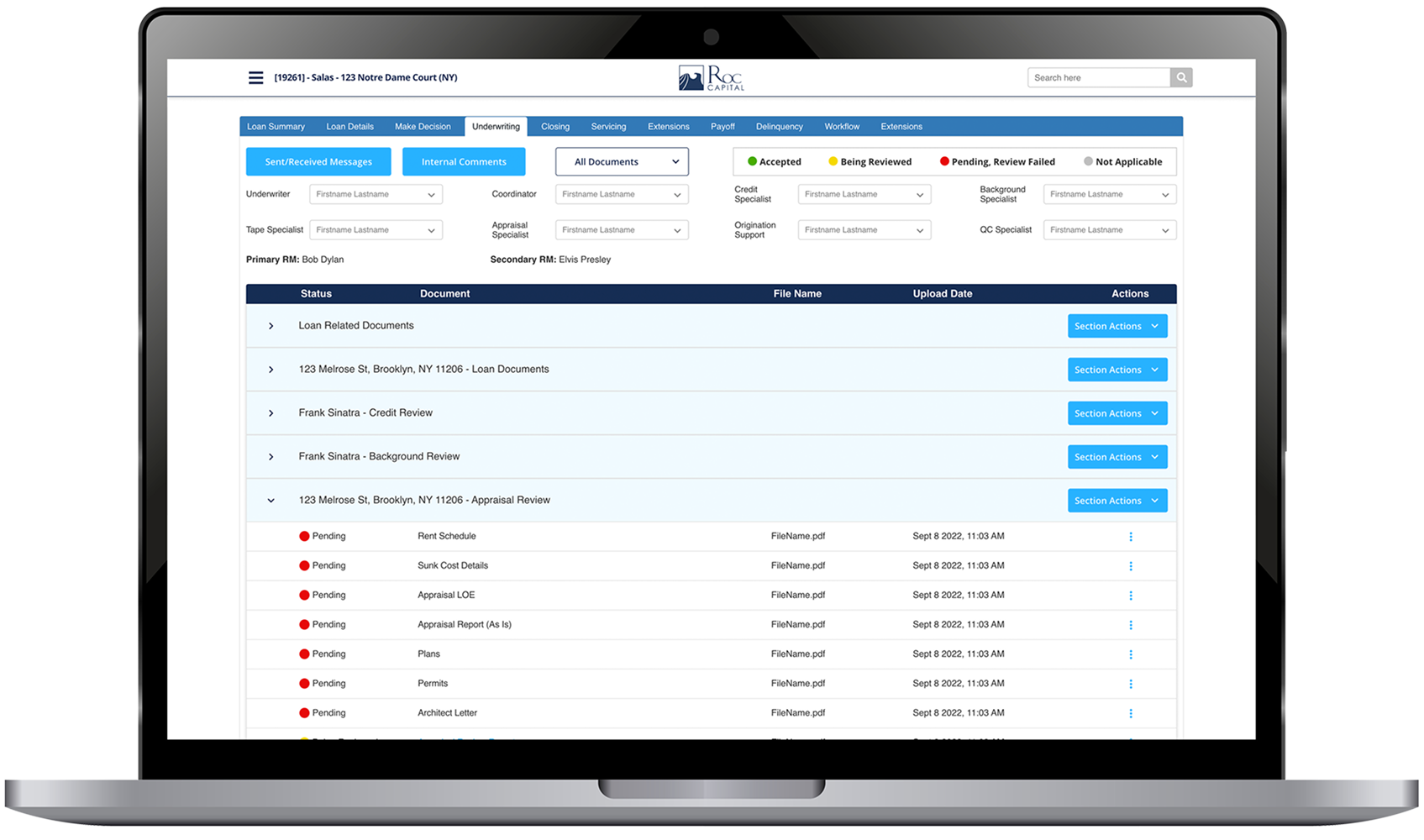
Commercial fix-and-flip loans at Roc Capital once took three to four months to approve, with layers of credit, renovation and appraisal review. Roc set out to cut that to a couple of weeks by automating the full loan lifecycle for lenders, borrowers and investors. Since 2017, First Factory's full-stack and UX/UI team has built the interface for every step of the application, document management and approval workflow. The team added backend reporting that serves hundreds of thousands of rows of new credit and market data each week. As Roc diversified, the team built a new platform for its Elmsure Insurance business, where clients request quotes and providers bid on loan coverage. A mobile product gives parties fast access to documents and photo evidence on site. The platform has funded more than $20 billion in loans.
Technology: Java, Spring, Python, Node.js, React, Redux, TypeScript, MobX, React Native, PostgreSQL, Twilio, JasperSoft Reports, Selenium, Jenkins, AWS.
FINRA Broker Dealer: a regulated fixed-income trading platform
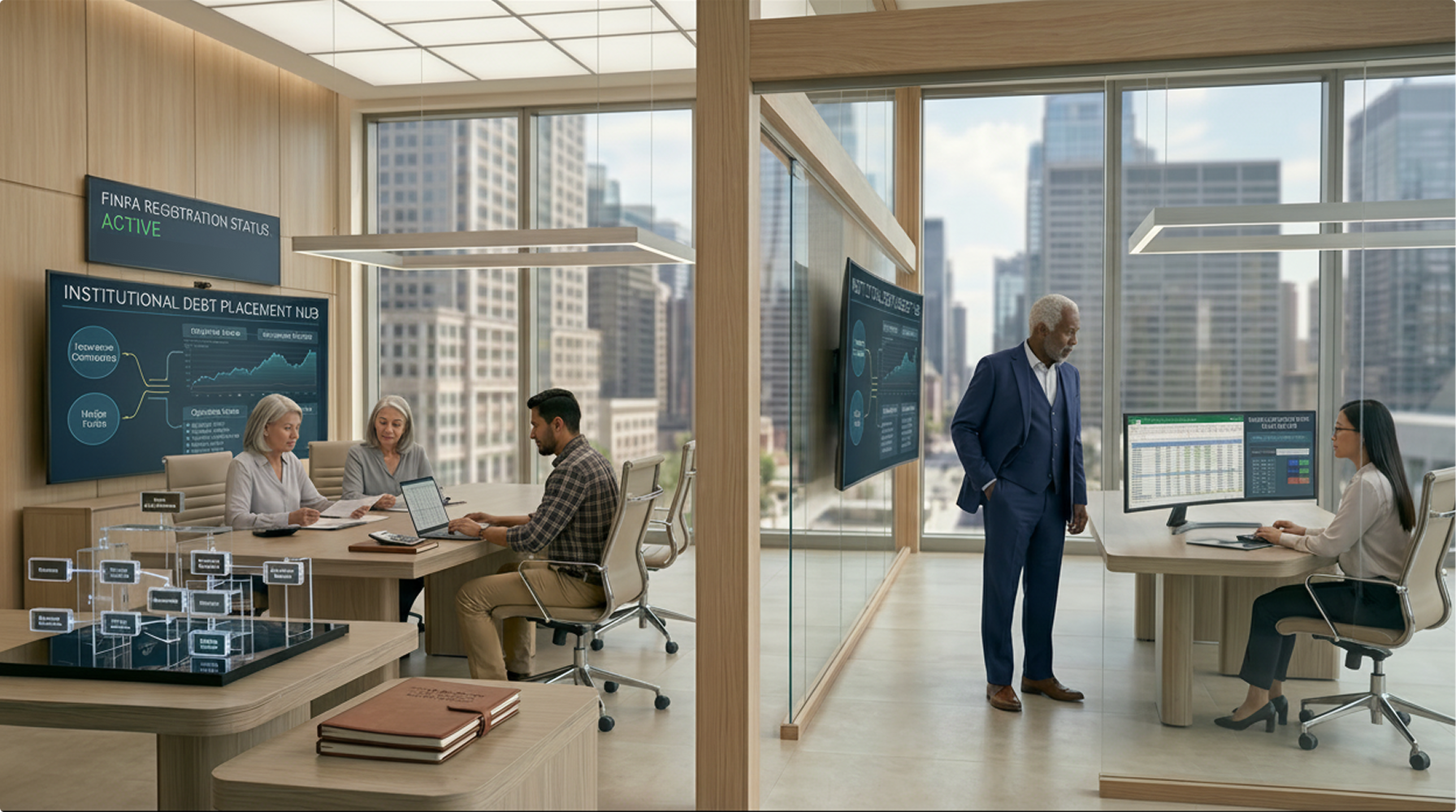
A FINRA-registered broker-dealer specializing in fixed income and private placements ran bond pricing and client account management through spreadsheets and multi-step manual workflows. The firm had no development team of its own and needed a partner who could learn the mechanics of pricing complex, less-liquid credit instruments. The engagement grew from an existing relationship with an affiliated firm. First Factory designed a vertical platform to replace the spreadsheets, shaped directly by feedback from the firm's analysts. The system pulls pricing data from numerous external sources and includes invoicing and a client portal for account review. The client is anonymized at its request.
Technology: React, Material UI, NestJS, Node.js, Python, OpenSearch, Elasticsearch, Docker, Linux, AWS, Figma, Bitbucket.
CommonBond: fixed-price build to multi-year partnership
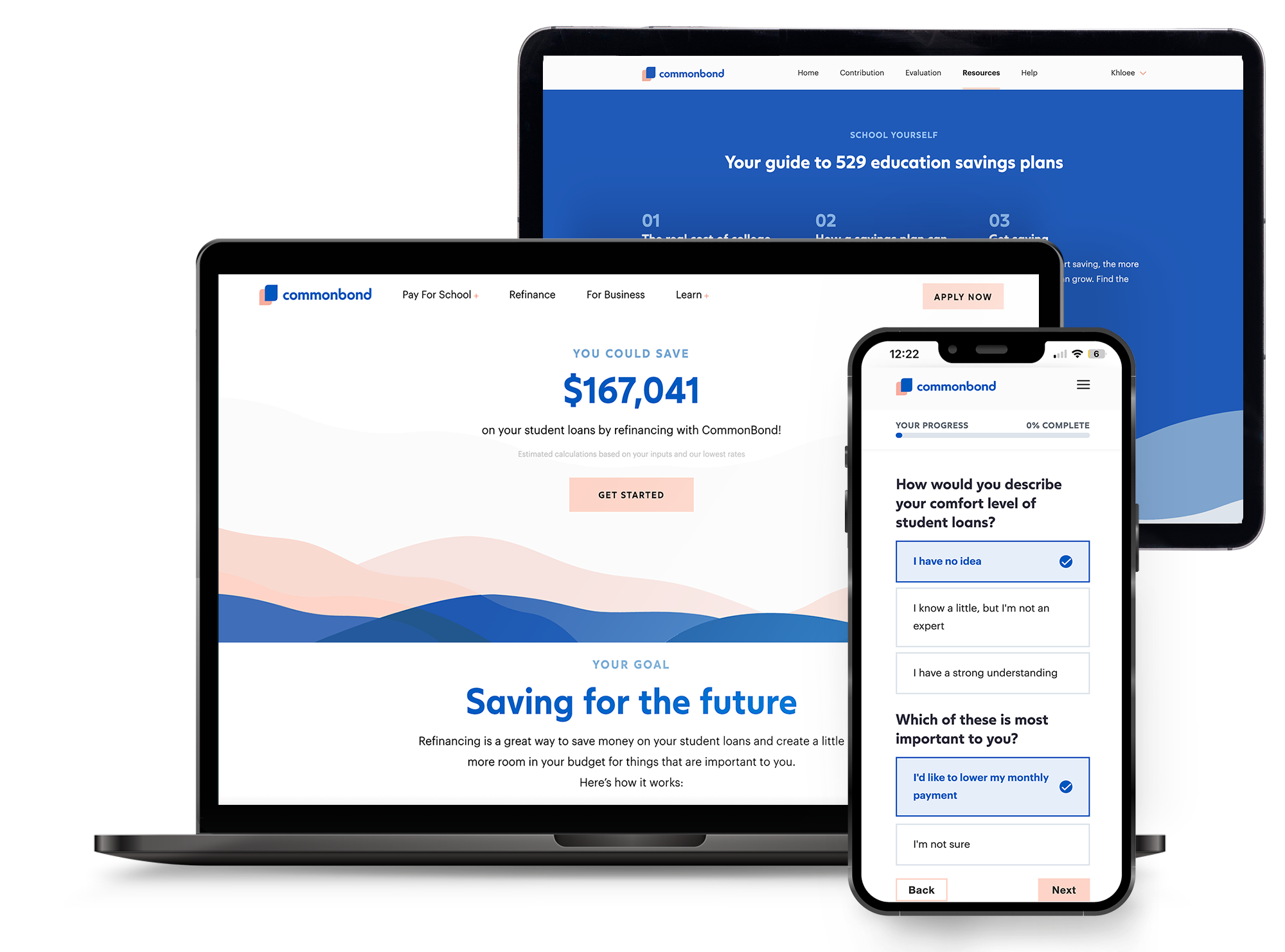
CommonBond needed a full suite of web apps and backend services for its student-loan repayment program on an aggressive timeline, while its own engineers carried a heavy load of core Java services. First Factory took full project ownership of the program on a fixed-price basis, covering design, development, manual testing and the team's first implementation of automated QA. The work integrated third-party funds verification and credit rating services. The team also guided a Java-to-Kotlin migration that improved the platform's long-term maintainability. That delivery grew into a multi-year staff augmentation partnership across several CommonBond teams, with working relationships that carried into the founders' future companies.
Technology: Java, Kotlin, Hibernate, PostgreSQL, React, Bootstrap, PHP, Selenium, Docker, AWS.
See the CommonBond engagement.
IFI Network: banking-as-a-service built from scratch
IFI Network's founders had worked with First Factory at a previous finance company, so when they set out to connect advisors and institutions with community, regional and minority-owned banks, they called us first. The platform had to let wealth managers offer private-labeled deposit, loan and settlement products under their own brand. A UX/UI designer led user research, information architecture and clickable prototypes before development began. The team built the MVP on AWS, using Cognito for authentication, ECS for compute and RDS with MySQL for data. Apollo GraphQL ties the microservices together, with Node.js, Prisma and React across the stack and Plaid for permissioned account data. IFI Network is driving traffic and investment and is on track for the user and investment milestones that set up a strategic exit.
Technology: AWS (Cognito, ECS, RDS), MySQL, Apollo GraphQL, Node.js, Prisma, React, Plaid.
See the IFI Network engagement, or read the longer private-label investing platform story.
Arc Risk and Compliance: an AML case-analysis platform
Arc Risk and Compliance is an anti-money-laundering consultancy staffed by former regulators, BSA officers and technologists. As its practice grew quickly, Arc needed to stand up a product engineering capability alongside a small, newly formed internal team. First Factory helped define the tools, frameworks, software engineering practices and UI foundations, while building the case investigation system in parallel. The Scrum team built Oasis, Arc's AML case-analysis platform, to handle large volumes of transaction alerts and multi-user investigation workflows. Oasis became a stable, production-ready system that Arc's analysts rely on for high-volume alert review. Arc later expanded the work into a long-term staff augmentation partnership with its internal team.
Technology: React, Redux, REST APIs, Python, C#, ASP.NET, automated unit testing.
See the Arc Risk and Compliance engagement.
CloudPay: technical leadership for global payroll
CloudPay runs payroll, salary payments and pay-on-demand for multinationals in more than 130 countries through a single platform. Its Costa Rica office was growing, and hiring senior software engineers locally proved slower and more competitive than planned. First Factory placed engineers inside CloudPay's existing Scrum structure, with a First Factory engineer serving as Technical Lead for a team of eight. The team built a report engine that generates MongoDB queries from configurable metadata, so business users can define reports without custom development. It also designed an event-driven integration between the Payroll and Payments modules using RabbitMQ, and a Zendesk-integrated drawer that puts support tickets beside each payroll run. When CloudPay was ready to bring the roles in-house, First Factory supported the direct hire of the engineers it had placed.
Technology: Java, Spring Boot, Vue.js, MySQL, MongoDB, RabbitMQ, REST APIs, Maven, Mockito, Jenkins, Bamboo, OpenL, AWS.
FrankCrum: advancing a stalled payroll MVP

FrankCrum, a PEO serving thousands of businesses since 1981, committed to building a next-generation HR and payroll platform from the ground up on modern technology. The goal was a codebase with the architectural integrity to stay maintainable and scalable for years. First Factory joined in 2023 and worked closely with FrankCrum's IT department to sharpen requirements, propose proofs of concept and set architectural and coding standards. The team defined a microservices architecture and built APIs for IAM, HRIS Core, Payroll and the New Hire Wizard, with integration to the Worklio payroll API. It owned critical areas including security, user permissions and hiring modules, and produced architectural templates and documentation for future teams. First Factory also coached two agile software development teams toward higher Scrum maturity. The resulting MVP aligned closely with FrankCrum's expectations and gives the platform a scalable foundation.
Technology: .NET Core, C#, React, Redux, SQL Server, Azure, microservices.
Global financial intelligence leader: engineering for market data
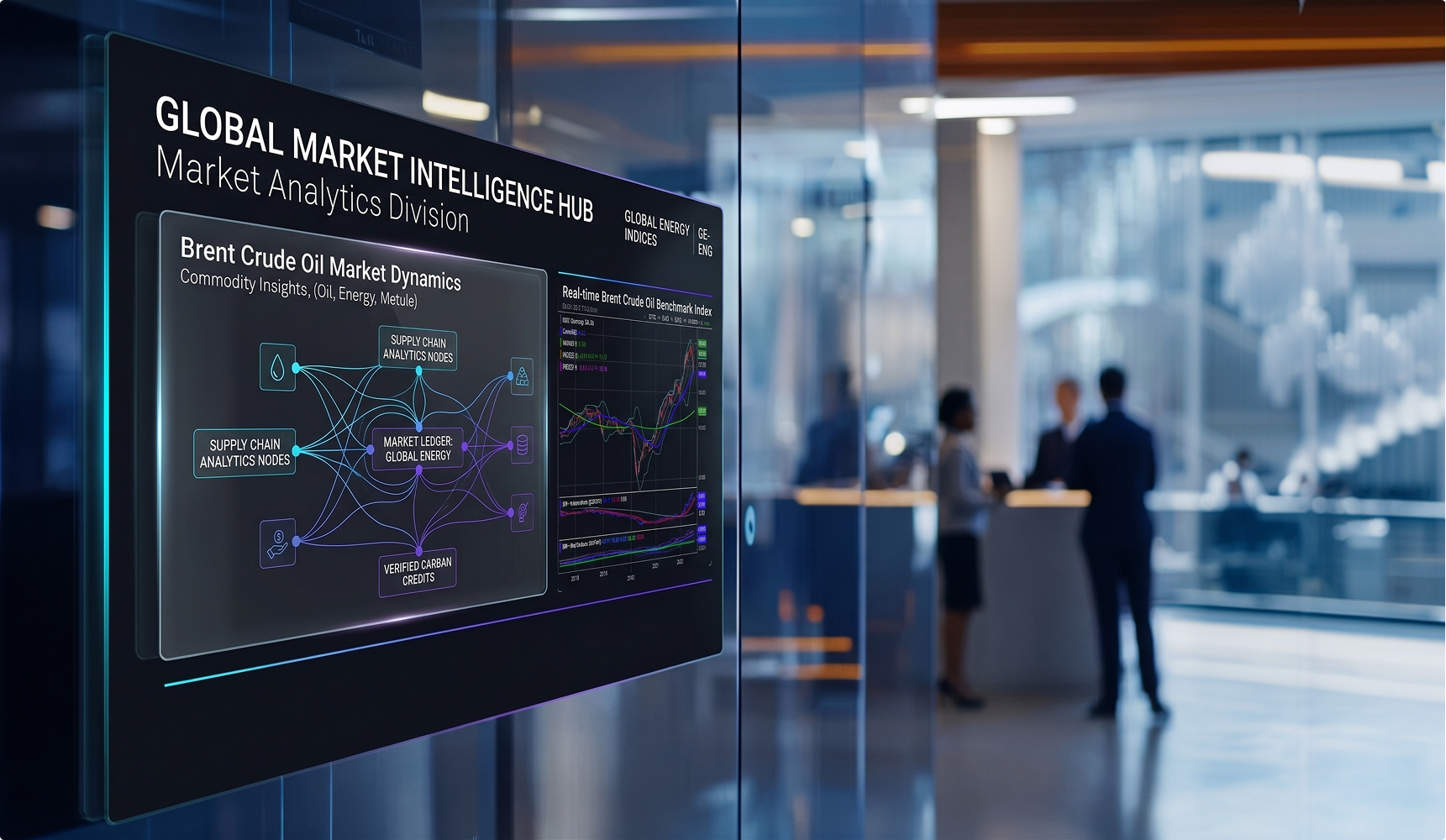
A global provider of credit ratings, benchmarks and data analytics acquired a tool that lets its teams publish commodities market data worldwide, in multiple languages, with minimal developer input. Putting that tool to work required a large team to configure and extend its prebuilt templates for a global user base. First Factory assembled a team of more than two dozen that met the first year's goals. The client extended the team for nearly another year to push the platform further toward automation. Other departments then brought on First Factory software developers, project managers and QA engineers, and the relationship ran more than seven years. The client is anonymized at its request.
Technology: C#, JavaScript, SQL Server.
Robo-advisor: equity-aware investing for underrepresented investors
.png)
A digital investment adviser building portfolios around the real-world earnings and life patterns of its customers was scaling quickly after a major funding round. It needed more engineering capacity, specifically senior engineers and technical leads who could join an established team and help manage it. First Factory's engineers contributed to the launch of the company's first mobile application. The app lets customers transfer money from major banks, handles clawback processing and delivers investment guidance and forecasting tools. The partnership ran from 2018 to 2024. The client is anonymized at its request.
Technology: React, React Native, Redux, Ruby on Rails, MySQL, Redis, Storybook, Webpack, Docker, Terraform, AWS.
See the robo-advisor engagement.
Quicken: data-driven front-end work for a personal finance pioneer
Quicken has defined personal financial management software since 1983, and it wanted to raise the bar on front-end development for its marketing site and mobile app. Millions of people rely on Quicken for budgeting, investment tracking and retirement planning, so both surfaces carry real weight. From 2019 to 2022, First Factory drove the marketing site through A/B testing, heatmap data and user interaction analysis. In parallel, the mobile team brought the core of the web experience to the app and built new features against Quicken's roadmap.
Technology: React, Redux, Builder.io.
For more on how these teams handle regulated financial work, see FinTech software development.
Nearshore outsourcing examples in healthcare
Healthcare examples show nearshore teams handling telemedicine, oncology records and hospital hardware interfaces, including one engagement where the features built drove 35 percent of a year's new sales. Each of these clients carried clinical and regulatory stakes that a slow feedback loop would have made worse.
First Stop Health: telemedicine app to a full care ecosystem

First Stop Health delivers virtual urgent, primary and mental health care to employers, with 100 percent of its fees at risk against member engagement. In 2019, it wanted a mobile app that matched the full functionality of its web experience. First Factory started with a milestone-based project, opening with a detailed architectural proposal and Gantt chart so both teams aligned early. A Scrum team built the iOS and Android app for members, providers and administrators to schedule video visits and manage health records in one place. The scope grew to include project management, QA, calendar services, case management, referrals, custom surveys and on-site biometric screening results. An event-driven Python backend with Redis caching improved performance and replaced several third-party tools. Features the team built in 2024 contributed to 35 percent of that year's new sales, led by the company's expansion in counseling.
Technology: React Native, React, MobX, Python, Django, Redis, Firebase, Bitbucket, in a HIPAA and SOC 2 Type 2 environment.
See the First Stop Health engagement.
VieCure: modernizing an oncology platform

VieCure's AI-enabled platform helps community oncology practices build personalized cancer care plans from each patient's clinical and genomic profile. To reach community providers at scale, the platform needed federal CEHRT certification. VieCure set two priorities in sequence: modernize and standardize the codebase, then deliver the features certification required. First Factory introduced coding standards and modernized the platform's architecture. The team then built new API endpoints, third-party integrations in ASP.NET MVC and clinician features including voice commands, PDF export and patient-plan filtering. VieCure achieved CEHRT certification and continues to deliver AI-driven care plans to community oncology practices.
Technology: .NET, C#, ASP.NET MVC, Angular, Azure DevOps.
MIDAS Healthcare Solutions: from a stalled vendor to a new AI product

MIDAS builds MidasVIEW, an intelligent medication disposal system that records and verifies every disposal transaction with 360-degree video. In 2024, the company needed front-end interfaces for its new hospital drug-disposal machines on a startup timeline. First Factory delivered those interfaces, then built a proof of concept for AI video analysis to detect drug diversion at the point of disposal. The POC combined YOLO object detection with Claude on AWS Bedrock to interpret what the cameras capture. MIDAS expanded the POC into a new AI diversion-detection product, and First Factory continues to support it with ongoing data science work.
Technology: YOLO, Claude, AWS Bedrock, Python, .NET, Angular, NestJS, PostgreSQL, Docker, Terraform, AWS.
OneWorld: an enterprise suite for pharma and medical devices

OneWorld helps pharmaceutical, diagnostic and medical device companies exchange compliant information with healthcare professionals worldwide. Its proprietary HCP Genome profiles more than four million healthcare professionals on demand. First Factory built OneWorld's enterprise suite: an executive dashboard, a command center for convention management, the NovoNow meeting platform and the video streaming architecture behind it. The team also built a business card reader that uses AWS Textract and Comprehend to capture and classify contact details at events. The partnership has held together for years with a stable team, and OneWorld's President and CEO put it plainly: "No one has left our team in five years."
Technology: Angular, Node.js, Python, PostgreSQL, AWS (Textract, Comprehend, media streaming).
For more on clinical and regulated builds, see healthcare software development. Long tenure shows up in healthcare, and it shows up even more clearly in education.
Nearshore outsourcing examples in education and edtech
The education examples are the longest-running in the portfolio, from nearly a decade at Kaplan to six-plus years across Ascend Learning's brands. Learning platforms change every semester, and the teams that support them have to know the product well enough to keep pace without being told twice.
Ascend Learning: embedded product ownership across six brands
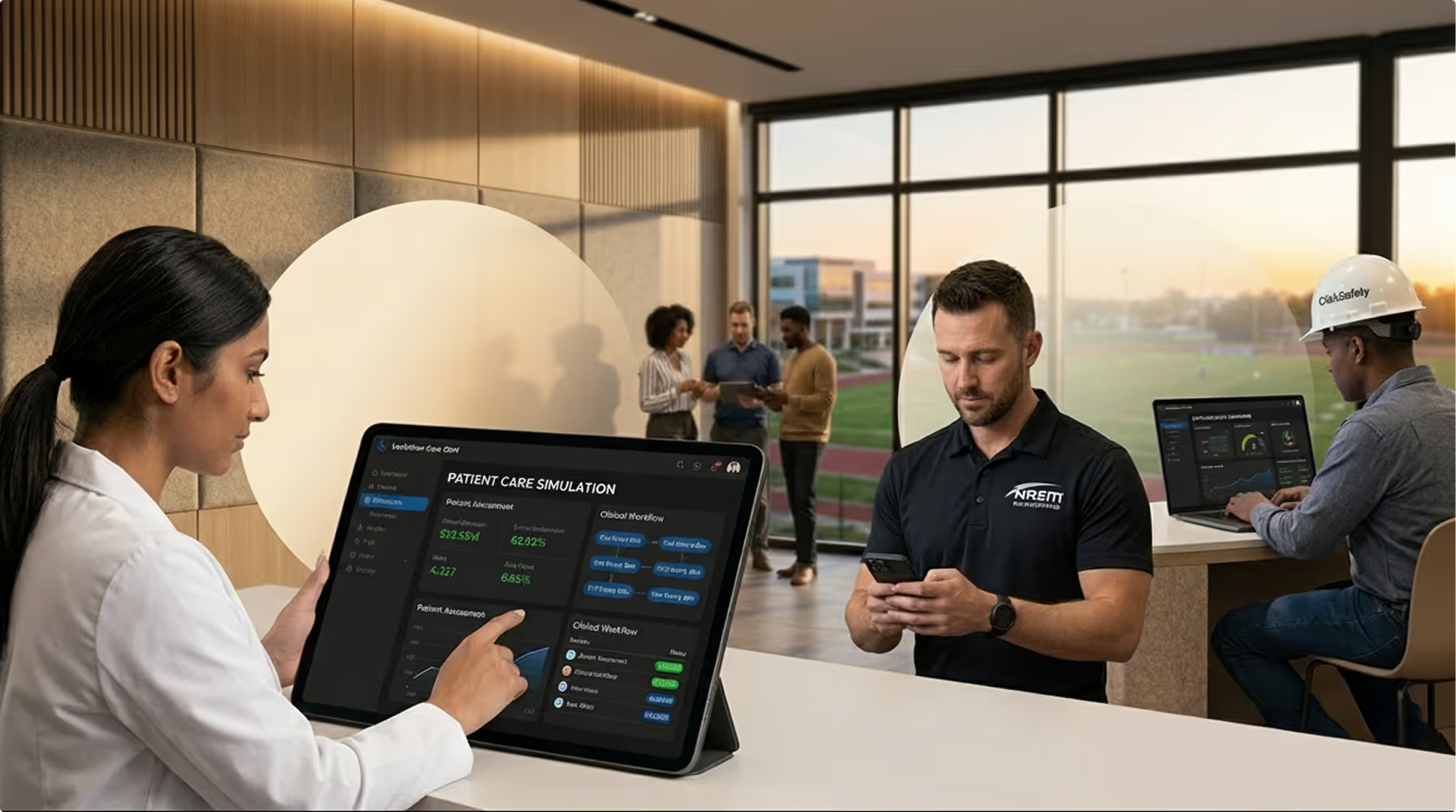
Ascend Learning runs a global engineering model that includes long-standing offshore teams in India. It wanted a nearshore partner on US hours to bridge the time zone differences between its US and offshore teams and take on day-to-day coordination and delivery oversight. Since 2021, First Factory's Technical Product Owners, engineers and Business Analysts have worked as an extension of six Ascend brands, including ATI nursing education, BoardVitals, ClickSafety, FISDAP and NASM. The Technical Product Owners have become product experts who shape product roadmaps, priorities and responses to customer issues, freeing senior Ascend stakeholders for other work. The engineering team handles complex logic such as authenticating university students whose personal information cannot be exposed. It has also built animation-based learning in Unity and interactive 3D visualizations for learning assessments. The results show up as more milestones delivered, fewer bugs in the backlog and faster resolution of customer pain points.
Technology: .NET, C#, ASP.NET Web API, Blazor, Angular, React, Ruby on Rails, PHP, Laravel, Python, SQL Server, PostgreSQL, MySQL, Redis, Kafka, Azure Event Hubs, Docker, Kubernetes, AWS, Azure, Datadog, LaunchDarkly, SonarQube, Unity, GitHub Copilot, Gemini.
See the Ascend Learning engagement.
Kaplan: powering the shift to remote operations

From 2009 to 2017, First Factory was a core technology partner for Kaplan Test Prep. The work began with a proof-of-concept internal application to support Kaplan's move from brick-and-mortar learning centers to a largely remote workforce. The proof of concept earned a larger role, and the team grew into the group that built and maintained Kaplan's internal applications. Those systems covered class scheduling, faculty hiring and training, and vendor and classroom operations. Eight years of continuity meant the team understood Kaplan's operating model, not just how its code worked.
Technology: Java, Spring, Scala, Node.js, Angular, ASP.NET Web API, SQL Server, MongoDB, WordPress.
Teachable: scaling a platform for 100 million students

Teachable lets creators sell online courses, coaching and digital downloads, and its platform has served more than 100 million students. At that scale, global payments and international tax rules become engineering problems. From 2021 to 2025, First Factory migrated Teachable's admin sections from AngularJS to React alongside a full user experience redesign. The team built a Tax Inclusive Pricing microservice to handle international tax rules at checkout. It also delivered customizable UI components so Teachable's marketing team can launch landing pages without developer help.
Technology: React, AngularJS (migration source), Gatsby, headless CMS, microservices.
Learnswell: AI assessment for medical boards

Learnswell's AI-powered platform helps medical boards and associations replace periodic recertification exams with continuous, personalized assessment. The product's logic is intricate, so the codebase had to stay stable as features grew. First Factory built and documented React components in Storybook and improved core application logic through changes to its XState state machines. The team also migrated the codebase from JavaScript to TypeScript for long-term stability and maintainability. Test coverage ran through Jest and Cypress.
Technology: React, TypeScript, XState, Storybook, Firebase, Jest, Cypress.
See the Learnswell engagement.
For more on learning platforms, see education software development. The next group of examples is where the AI and architecture work is most concentrated.
Nearshore outsourcing examples in B2B SaaS, manufacturing and professional services
These examples lean hardest on AI development and architecture work, including a 20-page cloud and security readiness assessment delivered in one week and an audit that found more than $60,000 in annual infrastructure savings. Where AI is involved, the model or service is named, because that level of specificity is what separates real delivery from a slide.
Caplugs: multiple efforts and a one-week AI-assisted modernization assessment

Caplugs has protected manufactured parts since 1948, producing more than 32 million parts a day across 13 manufacturing sites in 10 countries. The company identified eCommerce as a primary path to growth, and its storefront runs on a highly customized commerce platform tied to an ERP and plant systems. In 2025, Caplugs brought First Factory in for three fixed-price projects: a drag-and-drop page builder for marketing, file upload at checkout and a search migration from Elasticsearch to Algolia across a catalog of more than 50,000 items. Ahead of an international deployment, the CIO then asked a harder question. Could a legacy .NET WinForms manufacturing system integrate with Business Central, run in an Azure cloud environment and meet local data-protection law? Using CodeQuill, First Factory's code-comprehension platform built on Claude Sonnet, a senior .NET engineer reviewed 16,500 lines of legacy code and delivered a 20-page readiness assessment in one week. The assessment included a remediation roadmap in immediate, 30-to-60-day and 60-to-120-day windows, plus a phased Business Central migration strategy. Caplugs then moved the team onto staff augmentation to keep it in place.
Technology: .NET, .NET Core, C#, WinForms, Entity Framework, SQL Server, MongoDB, Angular, Vue.js, GraphQL, Algolia, Elasticsearch, Microsoft Dynamics 365 Business Central, Azure, Azure DevOps, Claude API, Claude Code, CodeQuill.
Quorum: a 120-day transformation roadmap
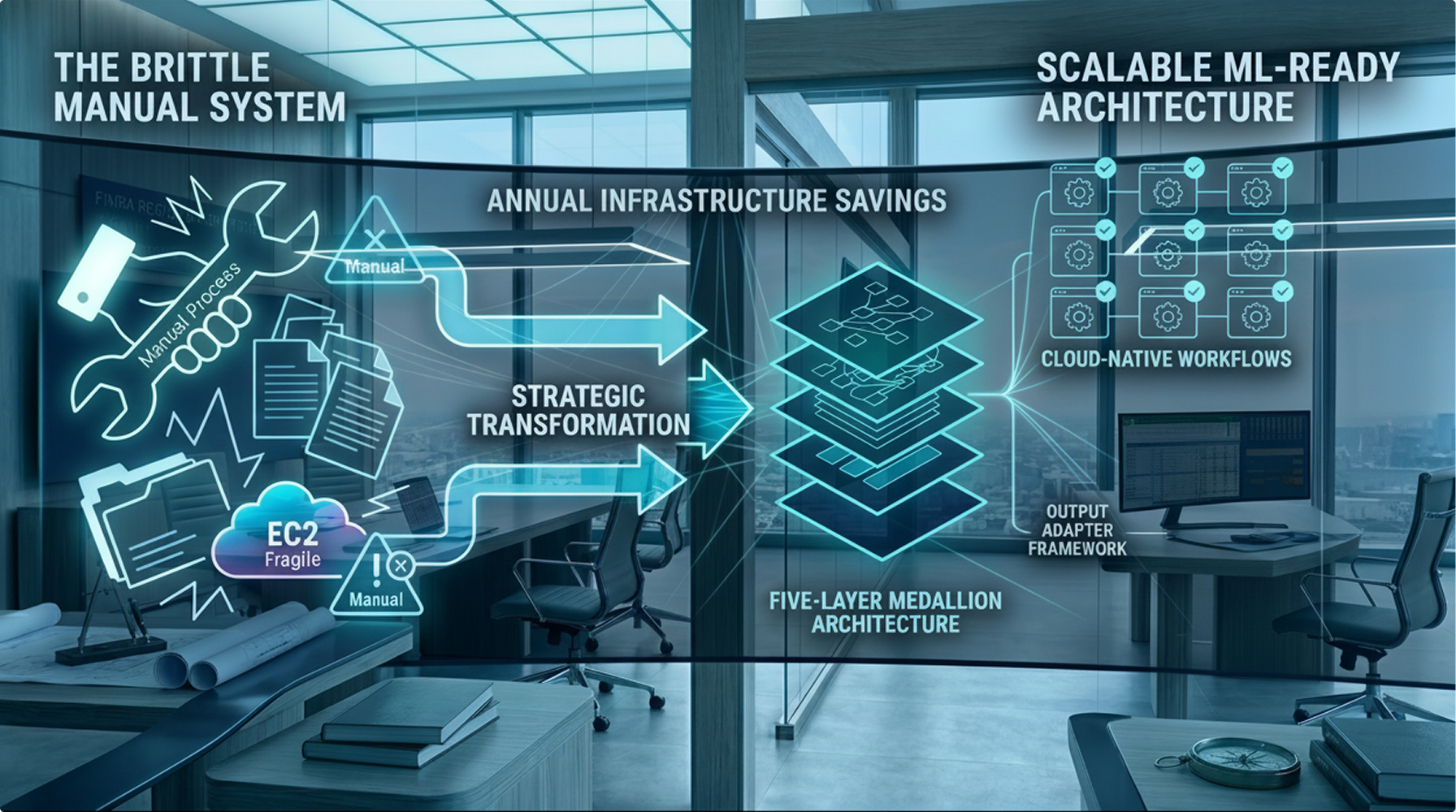
Quorum connects connected-TV and open-web ad exposure to real-world store visits for major publishers and US retailers, with privacy compliance built into its data sourcing. Its new CTO wanted to move from manual data operations to scalable, machine learning-ready infrastructure, and senior US data talent was hard to find. The engagement began when a First Factory Engineering Manager documented and defined exactly what Quorum needed. A strategic and technical audit identified more than $60,000 in annual savings through Snowflake storage optimization and AWS right-sizing. The team designed a five-layer medallion data architecture that reduces schema complexity by 90 percent. It closed with a 120-day roadmap and staffing plan targeting a fivefold improvement in client delivery speed.
Technology: Snowflake, AWS, Kubernetes, Java, PostgreSQL, medallion data architecture.
BessWave: an AI operational intelligence MVP
Mid-market operations teams keep critical information spread across disconnected systems, and BessWave set out to give them a single place to ask questions of it. Before building its full platform, the company wanted to validate product-market fit with real users. First Factory architected and deployed BessWave Lite using low-code automations, AWS Bedrock with Claude Sonnet 4.6, GraphRAG and enterprise system connectors. The product gives teams plain-English answers drawn from siloed operational data, delivered through Microsoft Teams, Slack and the web. The build gave BessWave a working product to put in front of customers ahead of the larger platform investment.
Technology: AWS Bedrock, Claude Sonnet 4.6, GraphRAG, Python, NumPy, TypeScript, React, PostgreSQL, Redis, Firebase, Docker, Playwright, Pytest, Swagger, Bitbucket.
Glass Frog: an AI governance coach and AWS migration
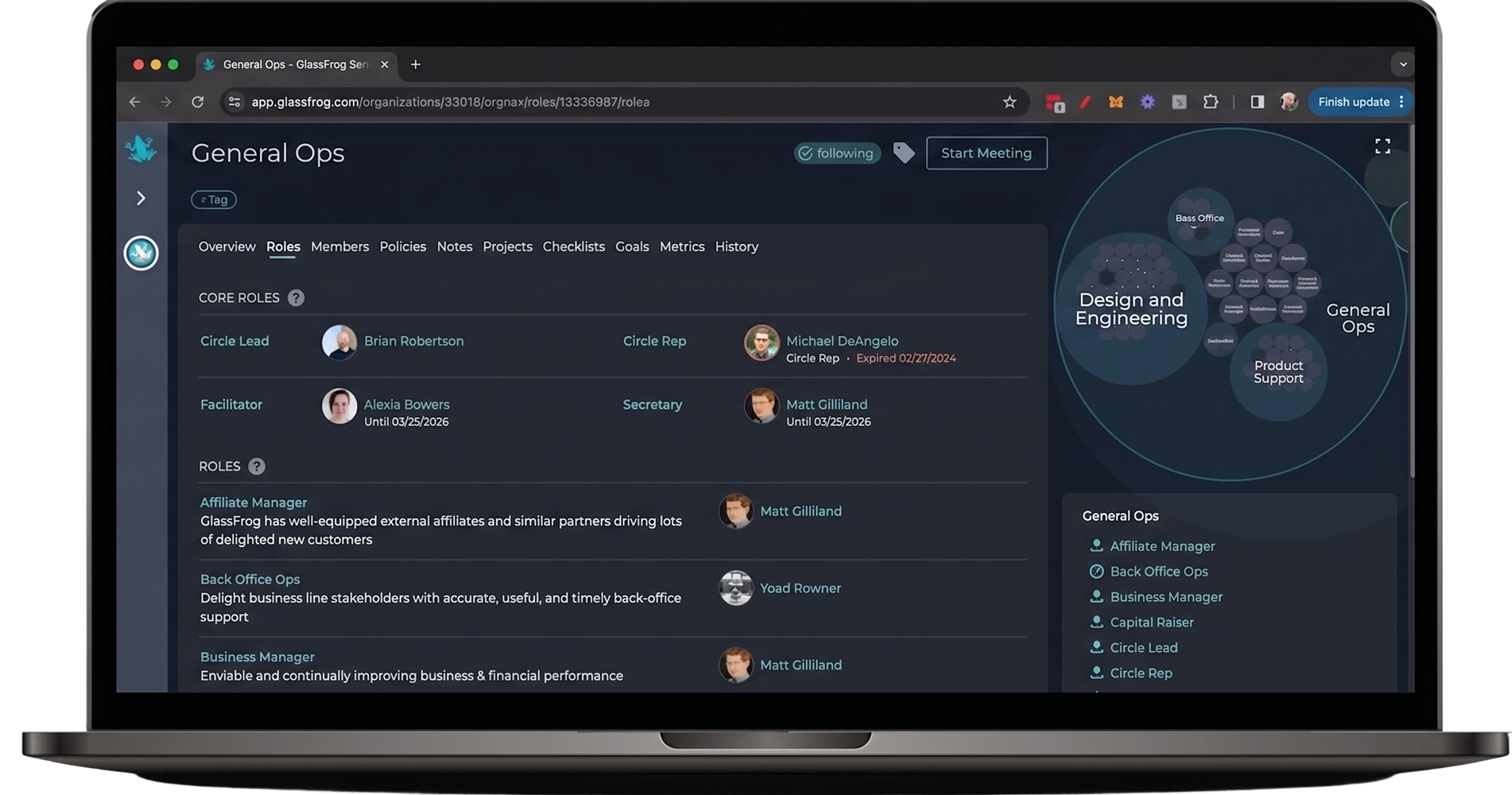
Glass Frog, built by the founders of Holacracy, helps self-managed organizations run their roles, circles and governance meetings. The company wanted an AI coach that could give each working group guidance tailored to its roles and context, and it wanted the same partner to migrate its infrastructure to AWS. First Factory built the coach on OpenAI's GPT-4 API, using function calling so users can move from a conversation straight into drafting a governance proposal. Clients tested the proof of concept across multiple projects and confirmed its accuracy, the absence of hallucinations and measurable time savings for their teams. The team also migrated Glass Frog's infrastructure to AWS using Docker, Kubernetes and ECS, with CI/CD in AWS CodePipeline and infrastructure as code in CloudFormation.
Technology: OpenAI GPT-4 API, Ruby on Rails, React, PostgreSQL, Docker, Kubernetes, AWS ECS, AWS CodePipeline, CloudFormation, CircleCI.
See the Glass Frog engagement.
ServiceTitan: engineering support for field service software
ServiceTitan builds the software that residential and commercial field service businesses use to run their operations. Since 2022, First Factory engineers have worked inside ServiceTitan's teams through staff augmentation. The work spans Kotlin and Python services, SQL Server and Snowflake data work, and Firebase. The team uses AI-assisted development tools, including Claude and Cursor, to raise delivery velocity without lowering the quality bar.
Technology: Kotlin, Python, SQL Server, Snowflake, Firebase, Git, GitHub, Claude, Cursor.
See the ServiceTitan engagement.
Gensler: application development for a global design firm
Gensler is the architecture and design firm behind projects such as the Shanghai Tower and JFK's Terminal 5. From 2021 to 2023, First Factory delivered milestone-based development for the firm. The work centered on a desktop application built with Electron, React and TypeScript. D3 powers the application's data visualization, and XState manages its application state.
Technology: Electron, React, TypeScript, D3, XState, Chakra UI, Webpack.
Generac: full-stack support for a power generation leader
Generac is a leading manufacturer of backup power generation and energy technology. From 2021 to 2022, First Factory engineers supported Generac's development teams through staff augmentation. Each full-stack developer on the team worked across Java and React. The engineers joined Generac's existing team structure and delivery cadence.
This part of the portfolio also includes engagements with anonymized startup work on AWS for AI analytics and digital twins for AI cybersecurity. The assessment approach behind Caplugs and Quorum is described on the AI readiness page, and the vertical view is on professional services software development.
If you need to decide what to modernize first, Caplugs is the story to read. It started with three fixed-price projects and ended with a CIO roadmap. Download the Caplugs case study.
Nearshore outsourcing examples in retail, consumer brands, travel and logistics
Consumer examples show nearshore teams running revenue-critical digital products for years, including a ten-year eCommerce modernization and a POS system serving more than 3,000 restaurant locations. When the software is the storefront, downtime is lost revenue, and the team has to treat it that way.
Fragrance.com: ten years of eCommerce modernization
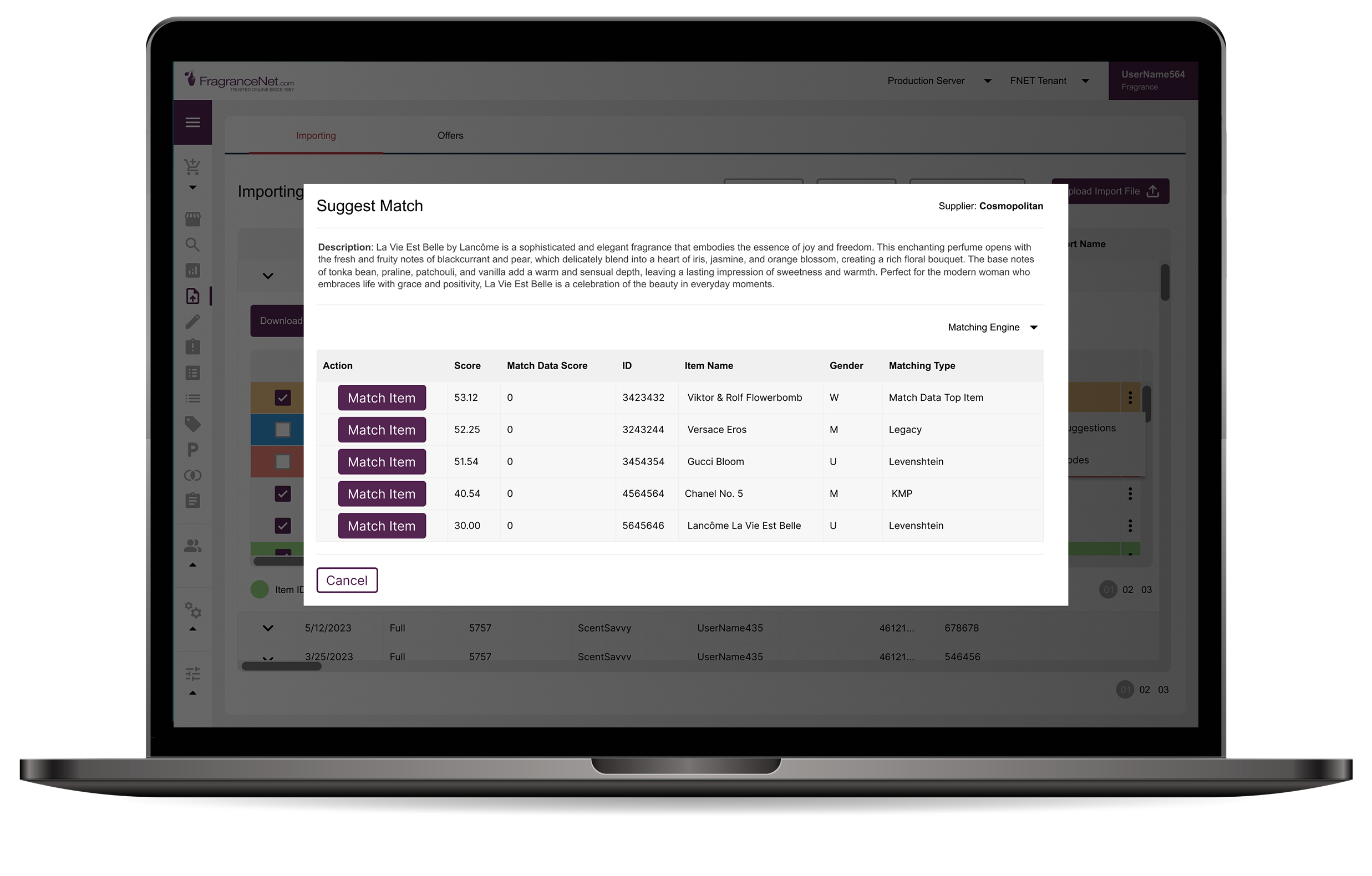
Fragrance.com, formerly FragranceNet, has shipped more than 40 million packages and sold more than $4 billion in beauty products, and its returning customer rate runs 15 percent above the industry average. The relationship began in 2014 with a React-based email marketing engine and grew into maintaining the company's critical purchasing applications. Those systems ran on Windows Forms in C# and Visual Basic, and the business could not take them offline for a day. The team rebuilt key desktop tools as WPF clients on .NET Framework 4.8, moved WCF services to RESTful APIs on .NET Core and later .NET 8, and built the BuyingPortal as a React single-page application with micro-frontends using module federation. Along the way, it introduced a reusable React component library, Docker containerization and CI/CD toward deployment on AWS ECS. First Factory now provides project management, DevOps, QA automation and full-stack development, and more than a decade of modernization has happened without disrupting daily operations. Fragrance.com's team summed up the working relationship simply: "My favorite part is that I don't have to think about it."
Technology: .NET 8, .NET Core, C#, WPF, MVVM, Windows Forms and WCF (migration sources), REST APIs, React, Next.js, Node.js, micro-frontends with module federation, Elasticsearch, SQL Server, Entity Framework, Microsoft Identity, Azure-based single sign-on, Docker, AWS ECS.
Read the Fragrance.com story or see the engagement page.
Jersey Mike's: mobile app and POS for 3,000+ locations
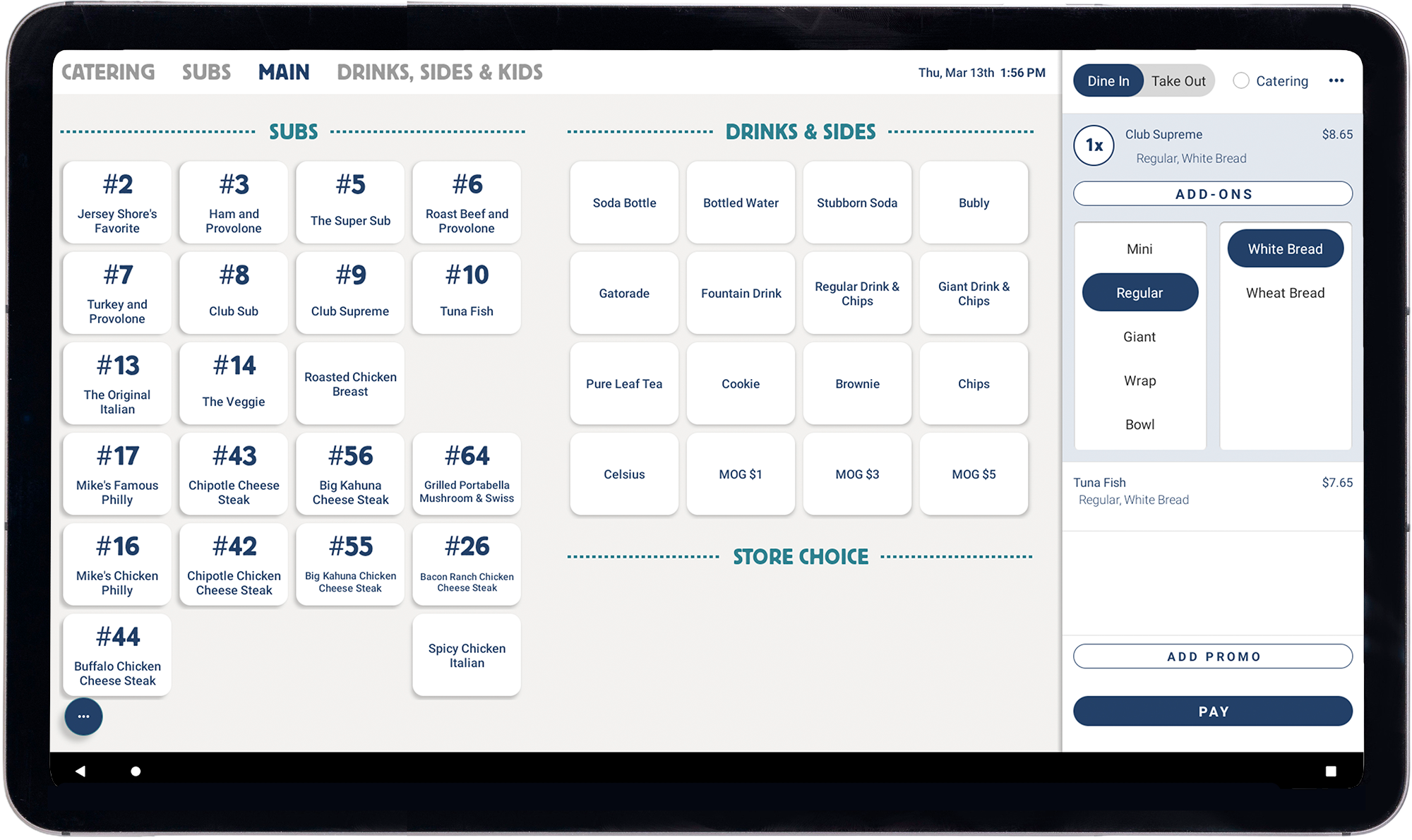
Jersey Mike's has more than 3,000 franchised locations across the US and Canada, and at that scale a slow POS at lunch is a revenue problem. Since 2021, First Factory has built features and improved performance across the company's Canadian mobile app and its franchise-wide POS system. The work spans the Back of House and Behind the Counter applications that run each store. The team also supports corporate marketing and sales promotion channels. Automated testing frameworks for mobile and web keep releases steady across a system that every location depends on.
Technology: React Native, Kotlin, Java, Vue.js, Nuxt, PHP, Appium, Playwright, Power BI.
See the Jersey Mike's engagement.
Budist: concept to California State Fair judging platform

Budist is a social review platform for the cannabis market, where experts and enthusiasts rate products on a 100-point scale for aroma, flavor, potency and effects. Its founders wanted a full-service partner to visualize the concept, support seed-round conversations with investors and then build and launch the product. First Factory led UX and market research, built clickable prototypes and joined investor pitch meetings. A UX/UI designer set product priorities from the start, and engineering choices favored fast feature releases and low maintenance. Mid-build, the team pivoted with the founders to capture a major opportunity. The React Native app became the official judging platform for cannabis products at the 2024 California State Fair.
Technology: React Native, NestJS, GraphQL, Apollo, Prisma, PostgreSQL, OpenSearch, Next.js, WordPress, AWS, Codemagic.
Vinous: taking over a wine publication's platform

Vinous, the wine publication founded by critic Antonio Galloni, serves collectors and professionals with in-depth articles, videos, maps and its Cellar Watch tool. Vinous works with a boutique US development firm and wanted a dedicated team alongside it for maintenance and feature work. First Factory has since taken on day-to-day development of the website and backend operations. The team replaced the existing Stripe integration with a self-hosted Stripe checkout and customer portal. It migrated legacy Ruby pages to Next.js and built admin tooling so a small editorial team can scale without added technical overhead.
Technology: Ruby on Rails, Next.js, React, Node.js, PostgreSQL, Elasticsearch, Stripe, Heroku, AWS.
Elevate Aviation: a private aviation booking app

Elevate Aviation Group offers charter and group travel through its Private Jet Services brand, along with aircraft acquisition and management. Private aviation clients expect concierge-level service, and the app had to deliver that customer experience from their phones. First Factory built a React Native app from the ground up for PJS. Clients book flights with secure payments, modify itineraries and send catering, ground transport and concierge requests from one place. Firebase handles notifications, and AWS handles authentication and storage.
Technology: React Native, React, Python, Django, PostgreSQL, Firebase, AWS.
See the Elevate Aviation engagement.
FStaff: a job tracker and payroll app for CDL driver staffing

FStaff connects DOT-verified CDL drivers with carriers nationwide for on-demand and dedicated routes. Drivers and dispatchers needed one view of jobs in progress, wherever drivers happened to be. First Factory delivered a responsive job-tracker portal in Angular and Ionic, with phone, maps and GPS integration. The team also built an internal payroll application with Node.js, GraphQL and Prisma that calculates pay stubs according to Costa Rican payroll law.
Technology: Angular, Ionic, Node.js, GraphQL, Prisma, maps and GPS APIs.
The consumer portfolio also includes an anonymized digital affirmations startup. For more on consumer products, see lifestyle brand software development. The last industry group moves from storefronts to audiences.
Nearshore outsourcing examples in media, sports and nonprofit
These examples include the world's largest missing-child alerting system and a custom CMS and app for a global MMA promotion, built on time and on budget. Audience reach is the measure here, and in one case the audience is every community where a child has gone missing.
ICMEC: AI facial recognition for missing children
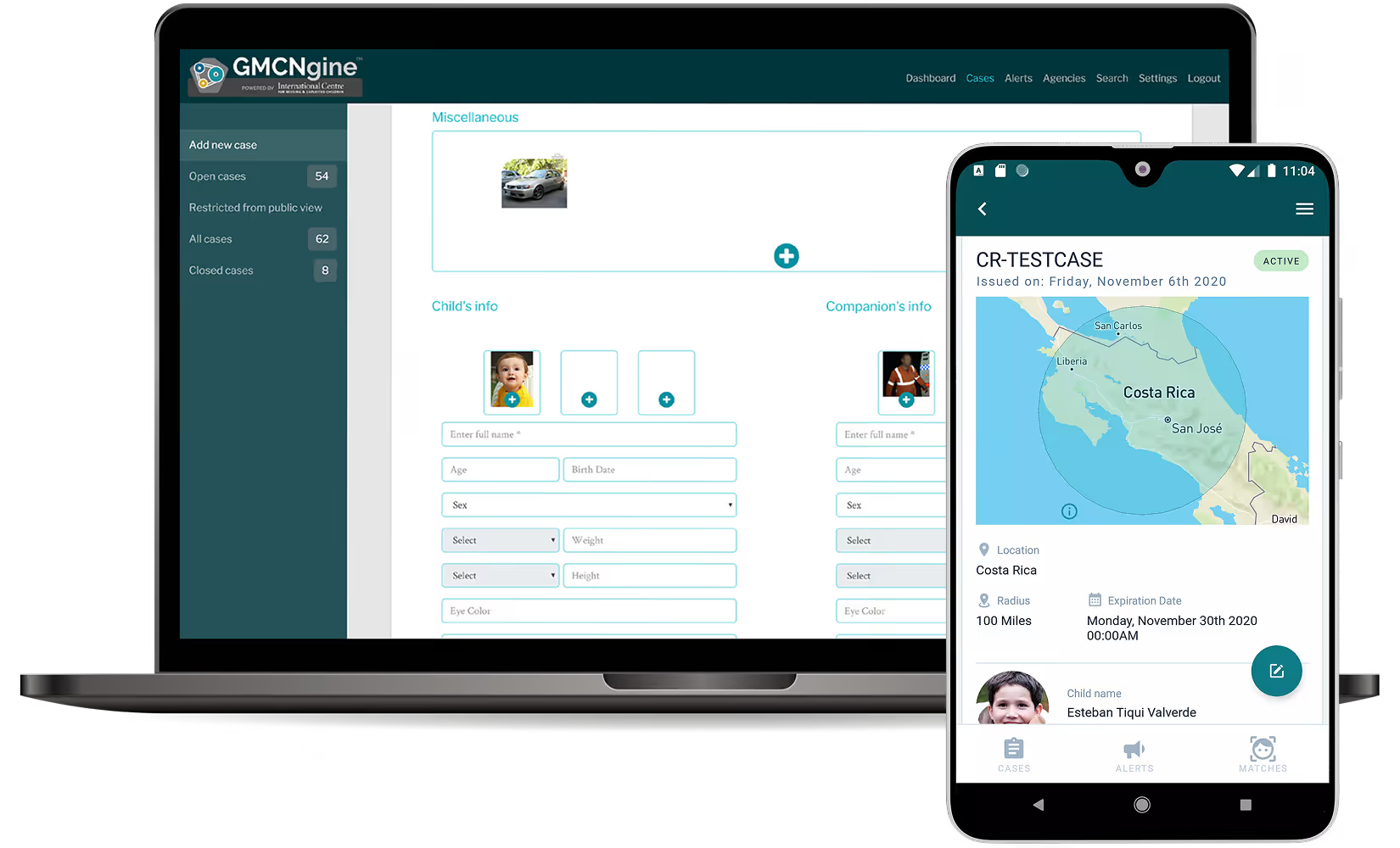
The International Centre for Missing & Exploited Children partners with missing child agencies in 30 countries across five continents. ICMEC's CTO wanted to move its case management system beyond a static database to an AI search engine that never stops looking. The vision included continuous image matching, real-time clues for case managers, cross-border collaboration and ad-style alerts broadcast on a global scale. Building on an ICMEC prototype that used AWS Rekognition, First Factory rebuilt the case management system on cloud infrastructure and launched it globally. The team built GMCNgine, which compares case images against the public internet and the dark web, alongside agency management, cross-jurisdiction case transfers, dashboards and geotargeted alerts. GMCNgine is now the world's largest missing child alerting system, with more than 6 billion alert impressions and more than 2,000 cases closed since 2019. In ICMEC's words: "They meet us every time we raise the bar, no matter how high."
Technology: AWS Rekognition, AWS compute, storage, networking and application integration services, Node.js, React, Redux, TypeScript, Elasticsearch, Docker, Jest.
Professional Fighters League (formerly Bellator MMA): CMS, website and app built from scratch
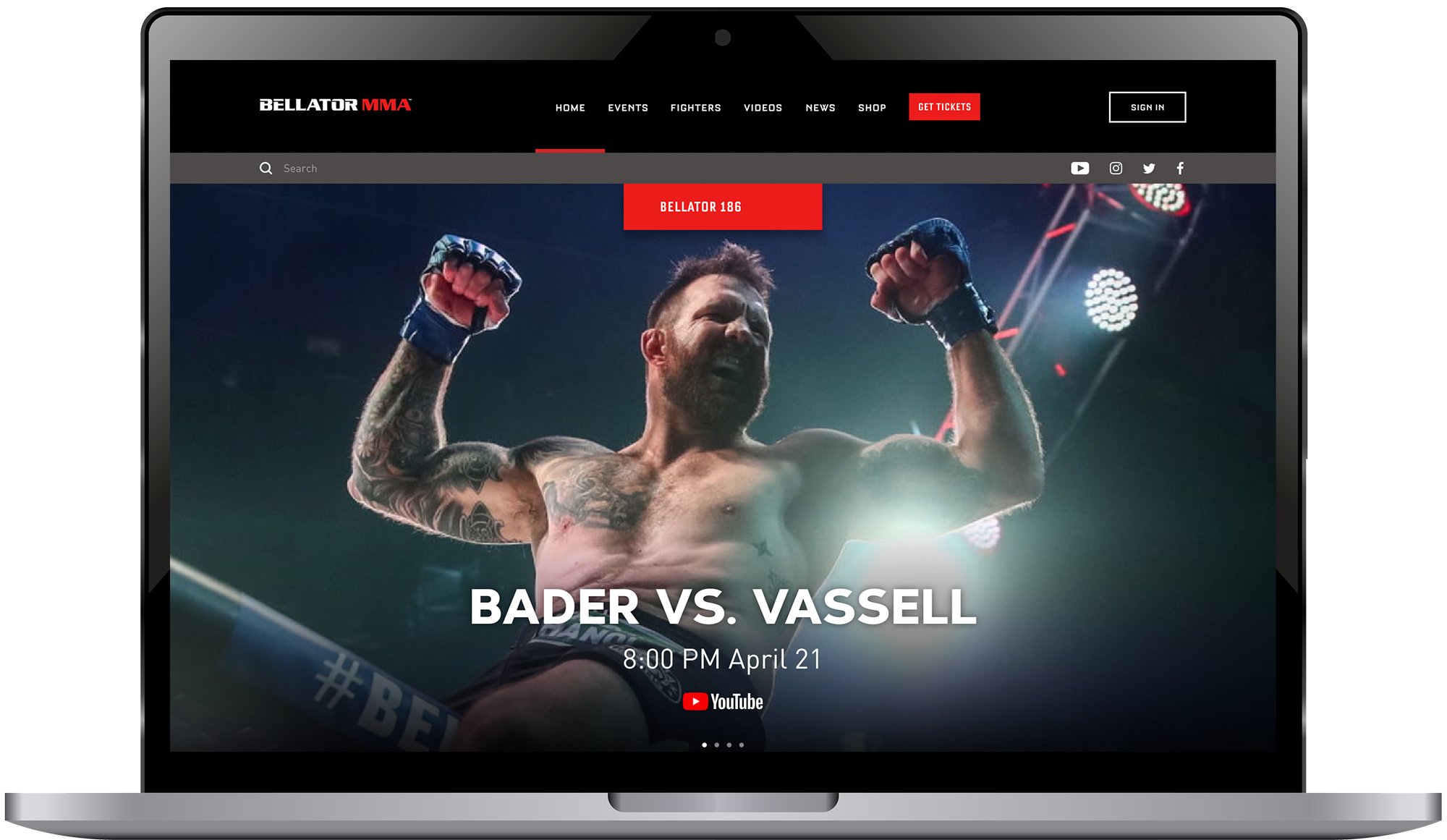
While owned by Viacom, Bellator MMA ran its web presence on shared templates built for the parent company's broader portfolio. To grow its audience, it needed a CMS, website and mobile app of its own, and it had no internal development or design team. First Factory's design team studied the audience and competitive landscape before development began. That research led the product toward fight footage and fighter histories rather than headshots and weigh-ins, with fight picks and gamification to engage a younger audience. Two teams delivered the platform in about ten months, including geofenced live streaming, on time and within budget. Bellator's Director of Technology called the team's agility and development speed its most impressive assets. The promotion now operates as the Professional Fighters League.
Technology: React, Next.js, React Native, NestJS, GraphQL, TypeScript, MySQL, AWS (compute, storage, Serverless).
See the Bellator MMA engagement.
DirectAvenue: a cloud-native media buying platform
Direct Avenue is a brand response TV agency that plans, buys and optimizes linear and connected-TV campaigns with an analytical, audience-first approach. The agency needed a media buying platform built around how its own buyers work. The engagement began with user interviews and research led by a First Factory UX/UI designer. From there, the team built DA Apollo on React, NestJS, GraphQL, Prisma and AWS. CI/CD pipelines and formal quality assurance procedures were part of the delivery from the first sprint.
Technology: React, TypeScript, NestJS, Node.js, GraphQL, Prisma, MySQL, Redis, Material UI, Storybook, Vite, Jest, AWS (Cognito, S3, SES, managed databases).
See the DirectAvenue engagement.
Leviathan Core: a CRM for a gaming influencer agency

Leviathan Core runs authentic influencer campaigns for the video game industry, matching brands with creators who have real followings. Managing a growing roster of creators and their content across platforms called for purpose-built tooling. First Factory built the agency's CRM for managing creators and campaigns. ETL pipelines pull creator content data from Twitch and YouTube, and a discovery tool helps the team find new creators. CSV imports and Cognito-based user management round out the platform.
Technology: React, NestJS, GraphQL, Apollo, PostgreSQL, Elasticsearch, AWS Cognito, ETL pipelines.
See the Leviathan Core engagement.
American Poolplayers Association: apps for 250,000 league members
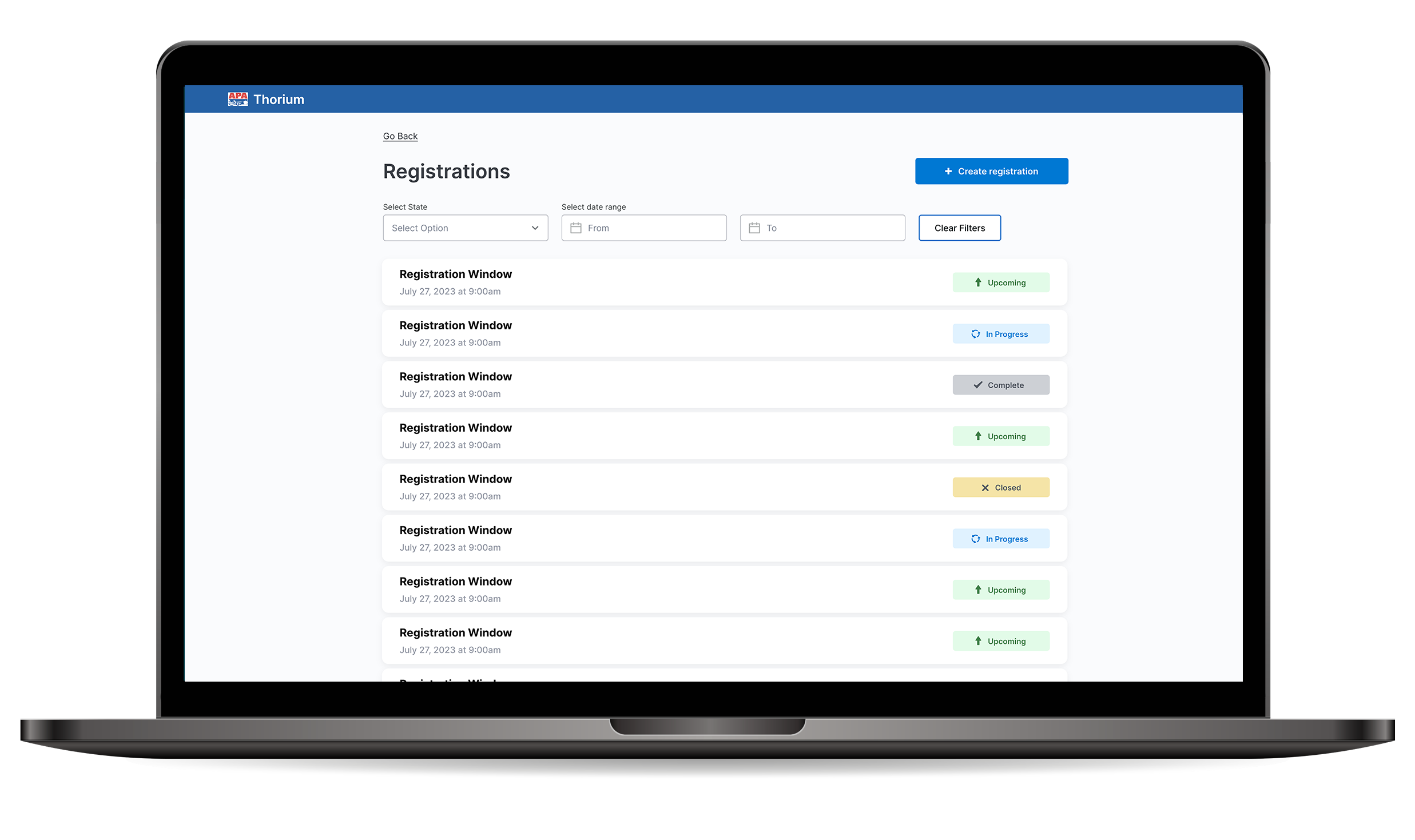
The American Poolplayers Association is the world's largest amateur pool league, with more than 250,000 members in nearly 300 leagues. Its Equalizer handicapping system lets players of different skill levels compete on even terms. APA needed a partner to design, build and manage new mobile applications for its league franchises and national tournaments. Since 2023, First Factory has built and supported those apps, starting with the ScoreKeeper app that teams use to record games and scores. The work has supported the organization's membership growth, including tools used at the APA's world championship tournament.
Technology: React Native, React, Next.js, GraphQL, Apollo, Sequelize, Storybook, Jest, Figma.
USHR: an in-game seat exchange piloted with the New York Mets
USHR lets fans at sporting events and concerts swap seats with other fans during the event. Its founder had worked with First Factory at a previous company and came back to turn the idea into something concrete enough to show a Major League Baseball team. First Factory delivered the product as a milestone-based build, with iOS and Android apps backed by a serverless, cloud-based API on AWS. The app was piloted at Citi Field with the New York Mets and is live in the App Store and Google Play in a limited release with select prospects. Because each launch covers a franchise's entire home venue, USHR and its partners are taking the time to get the experience right before a full rollout.
Technology: React Native, TypeScript, NestJS, GraphQL, MySQL, Serverless, AWS, Google Firebase.
Taken together, the 38 examples point to a few patterns worth knowing before you choose a partner.
What these nearshore outsourcing examples have in common
Across 38 engagements, the pattern is not cost cutting. It is duration and scope growth: projects that start small, outlast the original brief and move from building features to shaping the roadmap. Four patterns show up again and again.
Engagements start small and grow
CommonBond started with a fixed-price platform build and turned it into a multi-year staff augmentation partnership. Caplugs brought three fixed-price projects and ended up with a CIO roadmap and an embedded team. Kaplan began with a single proof-of-concept application and grew into a team that owned every internal app. None of these clients signed up for the relationship they ended up with. The first project earned the second.
Partnerships last years, not sprints
FragranceNet has worked with First Factory for more than ten years. Kaplan ran for nearly a decade, Ascend Learning for six-plus years and Jersey Mike's for more than five. Long tenure matters on long-term products because product knowledge compounds. An engineer in year four catches problems an engineer in month four does not know to look for, and First Factory's average employee tenure of more than four and a half years is what makes that possible.
Many start as rescues
FrankCrum came in after two years of prior vendor setbacks on its payroll MVP. MIDAS came in after a year of falling behind with a cost-focused outsourcing vendor. Both engagements began by catching up and then expanded, which is what switching partners should look like. Stabilize the work and restore delivery predictability first, then build on it.
AI work is already in production
ICMEC runs custom facial recognition in production. Caplugs got an AI-assisted codebase assessment in a week. BessWave, MIDAS and Glass Frog each turned an AI proof of concept into expanded scope, and OneWorld uses AWS Textract and Comprehend inside a live enterprise suite. Deloitte found that 83 percent of executives expect third-party vendors to bring AI capabilities as part of how they deliver services (Deloitte Global Outsourcing Survey, 2024). In these examples, AI arrives alongside architecture and technical leadership, not bolted on afterward.
The independent reviews on the client reviews page tell the same long-tenure story in the clients' own words. The practical takeaway is simple. Pick the model that matches where you are today, and expect it to change as the work proves out.
How to find the right nearshore example for your company
The fastest way for U.S. companies to judge a nearshore partner is to ask for an example in your industry and your team model, then speak with that client directly. We hear the question "Can you share case studies from companies similar to ours?" on nearly every evaluation call, and it is the right one to ask.
Start by filtering the portfolio to your industry and reading the two or three engagements closest to your situation. Then use the table at the top of this page to pick the model that fits where you are today, whether that is a fixed-price build, staff augmentation or a Scrum team. Finally, get on a call and ask to speak with a client who has been with us for two years or more, and ask how cultural alignment held up over that time.
The first step does not have to be a leap. Our 30-day risk-free guarantee covers every new resource and new staff augmentation engagement. If you are not satisfied in the first 30 days, you are not billed for the hours worked.
Conclusion
The case for nearshore software outsourcing to Latin America has been made plenty of times, usually with round numbers and borrowed manufacturing stories. What a software or product leader needs is simpler: proof that a nearshore team has already done the kind of work on their roadmap, for a company that looks like theirs, and stayed long enough to matter. That is what these 38 examples are for. Find the one closest to your situation, read how it grew, and ask the client what the first year was really like. For a broader comparison of sourcing models, including offshore outsourcing, see nearshore vs offshore vs onshore.
FAQs about nearshore outsourcing examples
Which companies use nearshore software development teams?
The range is wider than most people expect. In this portfolio alone, nearshore teams work for enterprises such as Kaplan, Ascend Learning, FrankCrum and Jersey Mike's, growth-stage platforms such as Roc360 and First Stop Health, SaaS companies such as ServiceTitan and Teachable, nonprofits such as ICMEC and early-stage startups such as Budist and BessWave. The common thread is a roadmap that needs senior engineers working inside the US business day.
How long do nearshore outsourcing engagements usually last?
With the right partner, years rather than months. First Factory's average client tenure is nearly three and a half years, and more than 25 percent of active clients have been with us for five years or longer. FragranceNet has passed ten years, and Kaplan ran for nearly a decade.
Can a nearshore team take over a project from a vendor that fell behind?
Yes, and it is one of the most common ways our engagements begin. FrankCrum and MIDAS both came to us after prior vendors missed their timelines, and Vinous handed over day-to-day development of an existing platform. We start with a technical and product review of the codebase, roadmap and backlog, then build a plan to continue or course-correct.
How much does nearshore software outsourcing cost compared with hiring in-house?
Senior Latin American engineers average $60 to $75 per hour, compared with $150 to $180 or more for US onshore senior talent (Accelerance 2026 Global Software Development Rates Guide). First Factory's staff augmentation rates typically run $45 to $70 per hour depending on experience and skill set. The rate is only part of the math. A team that turns over every nine months costs you ramp-up time again and again, so tenure belongs in the comparison too.
Is nearshore outsourcing a good fit for regulated industries like fintech and healthcare?
It can be, if the partner's data security controls are real. First Factory is SOC 2 Type 2 certified, and the examples above include AML compliance software for Arc Risk and Compliance, a regulated fixed-income platform, global payroll for CloudPay and the work behind VieCure's CEHRT certification. Ask any partner for the audit report behind its security certifications, not just the badge.
Can we start with a fixed-price project and move to a dedicated team later?
Yes, and many clients do exactly that. CommonBond moved from a fixed-price platform build into multi-year staff augmentation, Caplugs followed the same path in 2025 and FragranceNet started with a single email marketing engine project in 2014. A defined first project is a sensible way to test a partner before you commit a roadmap to them.
Can I speak with a First Factory client in my industry?
Yes. We would rather you hear it from a client than from us, and we can connect you with one whose industry and team model resemble yours. ICMEC's CTO spoke with five of our clients before signing. You can also read independent feedback on our client reviews page.
What does First Factory's 30-day risk-free guarantee cover?
The guarantee applies to every new resource and every new staff augmentation engagement. If you are not satisfied within the first 30 days, you can replace the resource or ramp down, and you are not billed for the hours worked. Full terms are on the risk-free guarantee page.
Talk to us about the example closest to yours
Tell us your industry and roadmap, and we will share the engagement that matches it most closely. Book a 15-minute call with our team.
.avif)