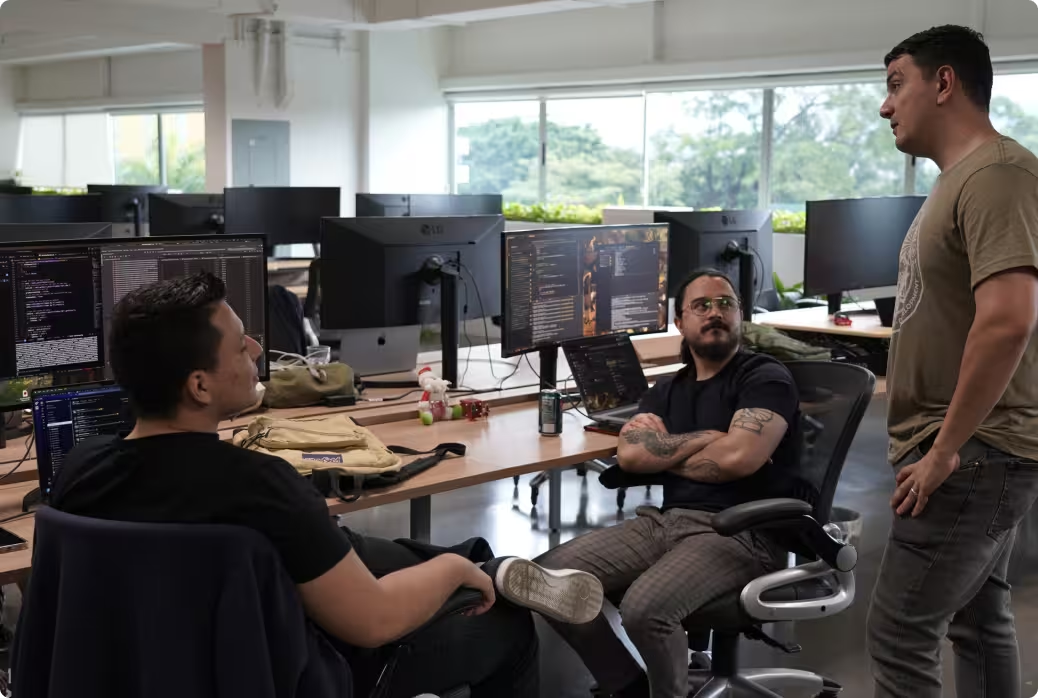
Agile Scrum Team

A Self-Organizing Team Tailored to Move Fast

Complete, cross-functional Scrum teams — designers, engineers, QA, and a dedicated product champion — who own delivery from sprint to sprint. 

Simple and Direct Consulting

Clear Recommendations, Ready To Be Put Into Action

Delivery Over Ceremony

We adopt only the processes that matter so that every team member is aligned and has what they need to move forward without friction.

Full Ownership, Every Sprint

Each sprint produces meaningful working software, demonstrated to your stakeholders, with feedback shaping what comes next.

Aligned and Accountable

No surprises at the end of a sprint. No ambiguity about what was committed to or what was delivered.

The Consulting Process

Four Phases of Your Engagement

  1. Discovery
    We learn your product, goals, and existing workflows and build a team tailored to it.
  1. Team Launch
    Your Scrum team is assembled, onboarded to your tools and codebase, and aligned on norms before Sprint 1 begins.
  1. Sprint Delivery
    Each time-based sprint ends with a working, demonstrable product increment.
  1. Continuous Improvement
    As the engagement matures, we use customer feedback, data insights, and stakeholder feedback to improve our process and deliver more value.
WhoM We Serve

Ideal Client Profiles for Our Consulting Services

Robust Product Roadmap

Companies with established product roadmaps who need a complete, self-organizing team to own a product track without the internal overhead

Running Parallel Workstreams

Organizations managing multiple product tracks simultaneously who need additional capacity without disrupting existing teams

Fast-Moving Startups

Growth-stage companies that need a team capable of shipping rapidly and adapting to changing priorities without requiring heavy overhead

Outgrowing Staff Augmentation

Teams that have grown beyond placing individual contributors and want a team that takes on broader product delivery with end-to-end ownership

Launching a New Product 

You have a vision and a roadmap. You need a team that can hit the ground running and deliver working software in short, predictable cycles.

What You Get:

  • A fully configured Scrum team including designers, devs, QA, and a PM aligned to your product goals
  • Necessary ceremonies for alignment, transparency, and predictable deliveries
  • Engineering Manager oversight for technical guidance
  • 30-day satisfaction guarantee on every resource

Ideal For: Companies ready to build, whether it's a new product or a significant new feature set.

Accelerating an Existing Product Roadmap

Your product is live and evolving. You need a reliable team that can absorb your backlog and keep delivery moving.

What You Get:

  • Professionals who understand your brand and adapt to your tools, workflows, and standards
  • Sprint demos that surface progress and allow stakeholders to shape priorities 
  • Backlog refinement support to keep your roadmap execution-ready
  • Proactive communication on risks, blockers, and decision points 

Ideal For: Product and engineering teams with an active backlog who need to increase throughput without the internal overhead.

Owning a Product Track End to End

You need more than capacity; you need a self-organizing team that can take ownership of a defined product area and drive it forward.

What You Get:

  • A complete, cross-functional Scrum team
  • End-to-end ownership of requirements, UX/UI design, development, testing, and delivery
  • Structured stakeholder meetings that continue to shape the product
  • Internal Engineering Manager providing architectural and development oversight 

Ideal For: Organizations that want First Factory to function as an autonomous, accountable product team.

Frequently asked questions

Everything you want to know, explained clearly

Speak with us
Do you require us to follow a specific Scrum methodology?

No. We are fluent in Scrum, Kanban, and hybrid Agile approaches. We begin by understanding how your team works best and adapt the ceremonies and cadence to fit. The goal is always the same: every team member aligned on what they are building, committed to what they promised, and moving forward without unnecessary friction.

How do you handle sprint planning and commitment?

Sprint planning is one ceremony we treat as non-negotiable. It is an alignment session where we define scope, acceptance criteria, dependencies, and the definition of done. Every team member leaves sprint planning with a clear understanding of what is expected of them before work begins. Ambiguity at the start of a sprint is a leading indicator of problems at the end.

What if our priorities shift mid-sprint?

We build flexibility into the way we work together. Mid-sprint scope changes are handled transparently. We discuss the impact on committed work with you before making adjustments, so you can make an informed decision rather than discovering a tradeoff after the fact. Over time, we use learnings to reduce the frequency and disruption of mid-sprint changes.

How are demos structured?

Sprint demos, usually every 2-3 weeks, are a core commitment of every Scrum team engagement. They are conducted with your stakeholders present and focus on demonstrating working software against what was committed at the start of the sprint. Demos are the most honest accountability mechanism in Agile. We welcome that visibility.

How big is a typical Scrum team?

Team size varies based on sprint capacity and product complexity. Most engagements run with three to seven contributors, including engineering, QA, and optional design or business analysis. We configure the team to what your product requires, not to a standard template.

How do you ensure communication and alignment across time zones?

Our teams operate from Costa Rica, just 1-2 hours behind Eastern Time, and all engineers are fluent in written and spoken English. We align working hours to your schedule. The communication model (which tools, which rituals, which escalation paths) is established explicitly during team launch, not improvised as the engagement proceeds.

What happens if a team member is not the right fit?

We offer a 30-day satisfaction guarantee on every resource placed. If a team member is not meeting expectations in the first month, we will not bill you for their hours and will work quickly to find the right replacement. We would rather address a fit issue early than allow it to slow your team down.

Can a Scrum team transition to a Staff Augmentation model over time?

Yes, and it is a common path. Many clients begin with a Scrum team engagement to drive a significant product initiative, then transition individual contributors into a long-term Staff Augmentation model as the product matures. We support that transition deliberately, protecting team continuity and the institutional knowledge your engineers have built.